Guide
Practical workflow notes.
A homeowner's air conditioner stops working on a Saturday afternoon in July. They open Google, search "AC repair near me," and call the first three results. Two go to voicemail. One picks up. That company gets the job.
This scenario plays out hundreds of times a day across every HVAC market in the country. The companies losing those calls are not losing them because of price or reputation. They are losing them because no one answered.
How big is the problem?
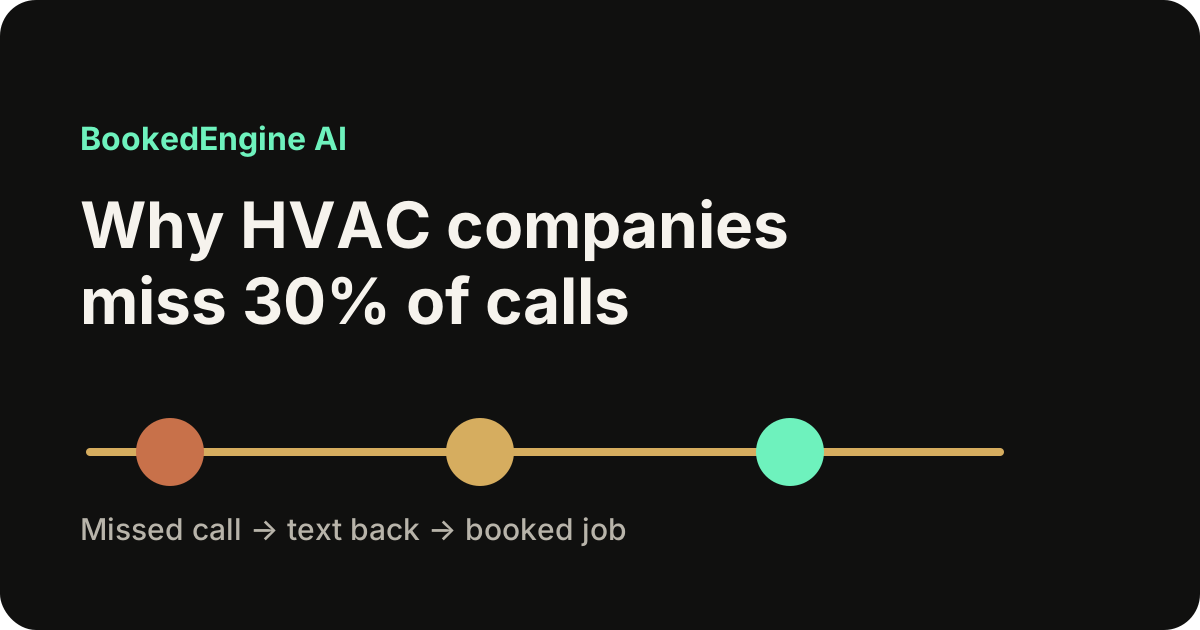
Industry data consistently shows that between 25% and 35% of inbound calls to local service businesses go unanswered. For HVAC companies, the problem is worse during peak season — exactly when call volume is highest and staff is stretched thinnest.
A missed call is not just a missed call. It is a missed call that almost certainly went to a competitor. Homeowners with urgent HVAC problems do not leave a voicemail and wait. They call the next number on the list.
The after-hours gap
Most HVAC companies field calls during business hours reasonably well. The gap opens after 5pm and on weekends — which is precisely when emergency HVAC demand spikes.
A system that fires an automated text within 60 seconds of a missed call — acknowledging the call, confirming the service area, and offering a scheduling link — captures a significant portion of those after-hours inquiries before the homeowner dials the next company.
The message does not need to be elaborate. Something like:
"Hi, this is [Company Name] — we just missed your call. We cover [area] and can typically schedule same-day or next-day service. Reply here or use this link to pick a time: [link]"
That message, sent within a minute of the missed call, changes the conversation. The homeowner is still on their phone. They see the text. They respond.
The estimate follow-up gap
The second place HVAC companies lose revenue is less visible: the unaccepted estimate.
A technician diagnoses a problem, sends a repair or replacement proposal, follows up once, and moves on. The homeowner says they need to think about it. The estimate sits open in the CRM — or more likely, in someone's email — until everyone forgets about it.
A structured estimate follow-up sequence changes this. Three touches over ten days, with messaging calibrated to the type of job (repair vs. replacement vs. maintenance agreement), recovers jobs that were never actually lost — just delayed.
What a fixed system looks like
An HVAC company running a proper missed-call and estimate follow-up system has two things the average competitor does not:
- An immediate response to every inbound call, regardless of when it comes in
- A documented follow-up sequence for every open estimate, so no job falls through the cracks
Neither of these requires hiring more staff. They require a workflow that runs automatically, informed by the existing tools the company already uses.
The measurement question
How do you know if it is working? The metrics to track are:
- Missed call recovery rate: what percentage of missed calls result in a booked appointment within 48 hours
- Estimate conversion rate: what percentage of sent estimates result in a scheduled job within 30 days
- Response time average: how long between a missed call or form submission and the first outbound contact
These numbers are measurable. If you do not know what yours are today, that is the starting point.
Next step
If your HVAC company is getting inbound demand but losing jobs in the follow-up gap, a revenue leak audit maps exactly where the drop-off is happening and which system to build first.